

 Share
Share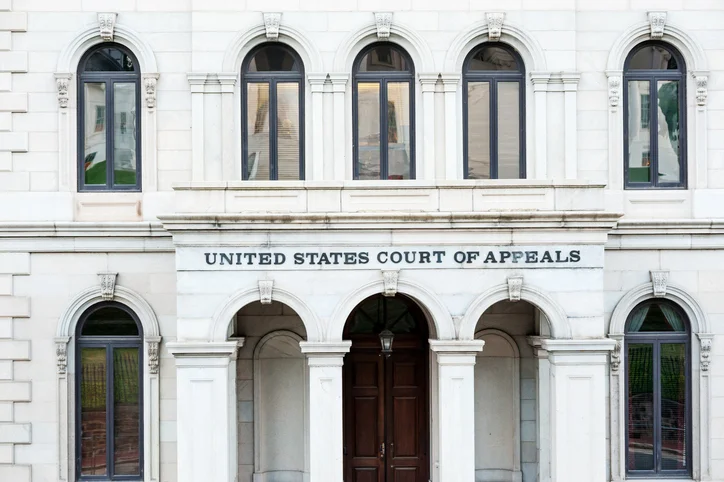
On March 6, 2026, the United States Court of Appeals for the Sixth Circuit rejected the National Labor Relations Board’s landmark 2023 ruling in Cemex Construction Materials Pacific LLC, holding that the NLRB exceeded its authority by establishing what amounted to a new rule of general applicability that did not adhere to the core limitations Congress placed on the agency’s adjudicatory authority. The decision, Brown-Forman Corp. v. NLRB, carries significant implications for employers, unions, and the future of NLRB policymaking.
Background: The Cemex Framework and the NLRB’s Decision in Brown-Forman Corp.
In Cemex, the NLRB created a standard whereby bargaining orders, which are directives from the agency requiring an employer to recognize a union even after a company’s employees voted against union recognition in an election, become more readily available when the employer that was presented with a valid demand for union recognition committed unfair labor practices in the lead-up to the election.
In establishing the Cemex standard, the NLRB stated that it would no longer look to Gissel bargaining orders, that is, bargaining orders imposed based on employer unfair labor practices only where the unlikelihood of holding a future fair election is proven; it had found from its experience in administering the Gissel standard that Gissel bargaining orders are insufficient to deter employers from engaging in misconduct aimed at undermining union support before workers voted.[1]
In the Brown-Forman case, the NLRB found that Brown-Forman Corp., doing business as Woodford Reserve Distillery, attempted to undermine support for an International Brotherhood of Teamsters affiliate by granting $4-per-hour wage increases after only offering $1-per-hour wage increases prior to the union’s involvement, distributing free bottles of bourbon, easing qualifications for annual pay raises, and rescinding a policy requiring workers to use vacation days during an end-of-year shutdown. Despite the union's significant loss in the representation election (14 votes cast in support of the union and 45 votes case in opposition), the NLRB relied on Cemex to order Brown-Forman to bargain with the union.
The Sixth Circuit's Reasoning
In reaching its decision to reject the NLRB’s recently created standard, the Sixth Circuit invoked the Supreme Court's 2024 decision in Loper Bright Enterprises v. Raimondo to reason that the Cemex standard for issuing future bargaining orders was “neither derived from the case-specific facts nor in furtherance of fashioning a remedy that resolved the parties' dispute,” and was, therefore, policymaking disguised as the adjudication of a dispute.
Central to the court's analysis was that in Cemex the NLRB had reiterated that the Gissel standard allowed it to issue a bargaining order, a remedy that the NLRB said was “warranted, necessary, and appropriate” both to resolve the parties’ dispute and to undo the effects of the unfair labor practice violations in the underlying case. The Sixth Circuit found this dual approach revealing: the NLRB acknowledged that creating the Cemex standard was not necessary to resolve the specific case at hand, and that applying the new framework did not alter any unfair labor practice findings or remedies. As the majority put it, “The Cemex Board said the quiet part out loud, proclaiming that the value in the new standard was its deterrent effect on future, hypothetical preelection violations of the Act.”
While the court upheld the underlying unfair labor practice findings against Brown-Forman, it vacated the Cemex bargaining order and remanded the case to the NLRB to “start fresh with the proper standards in mind.”
Implications for Employers Navigating Union Organizing Campaigns
Even before the Sixth Circuit’s recent decision, the NLRB’s expected incoming Republican majority was widely anticipated to overturn Cemex independently. And with the Sixth Circuit’s decision, all signs are pointing to an imminent return to the Gissel standard for issuing bargaining orders.
In the meantime, employers outside of the Sixth Circuit should stay abreast of developing caselaw, including the increased possibility that their Circuit adopts the Sixth Circuit’s holding to reject the Cemex decision.
Under the Gissel standard, the NLRB still has the authority to issue a bargaining order as a remedy for serious employer misconduct (although a secret-ballot election should remain the preferred remedy under that standard). Accordingly, employers navigating union organizing activity must understand that their conduct during campaigns will continue to be strictly scrutinized and could lead to claims of unfair labor practices.
If you need assistance in navigating a union organization campaign, please contact Joshua Hawks-Ladds, Ryan O’Donnell or DJ Anderson. Contact information and additional information about Pullman & Comley’s Labor, Employment & Employee Benefits practice can be found on our website here.
********************************************************************************************************
[1] The Gissel standard was created by the NLRB more than 50 years ago and endorsed by the Supreme Court in its 1969 decision in NLRB v. Gissel Packing Co..
This blog/web site presents general information only. The information you obtain at this site is not, nor is it intended to be, legal advice, and you should not consider or rely on it as such. You should consult an attorney for individual advice regarding your own situation. This website is not an offer to represent you. You should not act, or refrain from acting, based upon any information at this website. Neither our presentation of such information nor your receipt of it creates nor will create an attorney-client relationship with any reader of this blog. Any links from another site to the blog are beyond the control of Pullman & Comley, LLC and do not convey their approval, support or any relationship to any site or organization. Any description of a result obtained for a client in the past is not intended to be, and is not, a guarantee or promise the firm can or will achieve a similar outcome.
About Our Labor, Employment and Employee Benefits Law Blog
Alerts, commentary, and insights from the attorneys of Pullman & Comley’s Labor, Employment Law and Employee Benefits practice on such workplace topics as labor and employment law, counseling and training, litigation, union issues, as well as employee benefits and ERISA matters.