

 Share
Share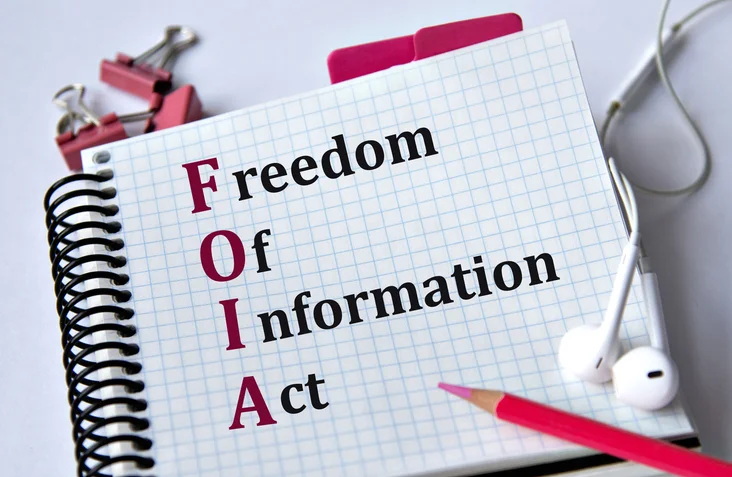
In a hectic world, public agencies (including school boards) must sometimes act promptly to address urgent matters requiring immediate action, including actions that require a vote by the board itself. So how swiftly can a board take action and comply with Connecticut’s Freedom of Information Act (FOIA) and its sometimes-pesky notice and meeting requirements? The following provides both a path forward and a cautionary tale.
Action at regular meetings.
While the FOIA requires agencies to provide 24 hours advance notice of their agendas for regular meetings, agencies can add items to their regular meeting agendas by a two-thirds vote of those board members present at the meeting. As such, if some urgent matter comes up after posting the regular meeting agenda, there is no problem adding the matter to the agenda (if you have the votes to add it and if your agency does not have a bylaw limiting such action).
What if something cannot wait for your regular meeting?
Your board retains the right to convene a “special meeting.” The FOIA requires that any notices/agendas of special meetings (along with any instructions for a remote or hybrid meeting, if applicable) must be filed with the town/city clerk(s) and posted on the district’s website 24 hours prior to the meeting. A board cannot add items to the agenda of a special meeting. However, a board could file an amended agenda, as long as it is filed at least 24 hours prior to the meeting.
A friendly warning: 24 hours may be more than 24 hours.
With respect to calculating the posting timelines for a notice/agenda for a special meeting, the FOIA provides that Saturdays, Sundays, legal holidays and any day on which the office of the agency, or the applicable town/city clerk(s) is closed shall be excluded. Connecticut’s Freedom of Information Commission (FOIC) has concluded that notice of a special meeting must be posted in the clerk's office for at least a 24-hour period that includes a minimum of one full business day. As such, if you are meeting on a weekend, you may essentially have to file/post the agenda at least by the close of business on a Thursday.
What if we cannot comply with these timelines and really have an emergency?
There is a very rarely used subset of “special meetings” under the FOIA known as “emergency meetings.” If an emergency meeting must take place, the meeting minutes must adequately set forth the nature of the emergency and the proceedings that occurred at the meeting. The minutes of an emergency meeting must be filed within 72 hours of the conclusion of the meeting with an agency’s own office and the town/city clerk’s office.
However, as noted by both the courts and the FOIC, the circumstances which permit an emergency meeting occur extremely rarely and only when it is not possible for a special meeting notice to be posted 24 hours in advance. In determining whether circumstances justify holding an emergency meeting, the FOIC and the courts have essentially defined an “emergency” as “an unexpected situation or sudden occurrence of a serious and urgent nature that demands immediate action.”
As such, don’t hold out much hope for being able to convene an emergency meeting.
Almost without fail, the FOIC and the courts have rejected claims that circumstances justified convening an emergency meeting. Here is a listing of prominent examples which were determined not to justify an emergency meeting: 1) a Saturday meeting with regard to asking for and accepting the resignation of a town employee following a verbal altercation from the previous day, 2) the removal of a fire department supervisor for failure to fix unsafe equipment; 3) a meeting to reject an arbitration award by the statutory deadline; 4) a meeting to terminate a teacher by the statutory deadline; 5) the resignation of a police chief and appointment of an acting chief; and 6) most recently, a meeting to fill a vacancy on a board of education before the town council could fill it.
There are markedly few cases (none of them recent) where the FOIC permitted an emergency meeting. As such, an agency should put little stock in the emergency meeting exception. A lack of foresight is not deemed to be a lawful excuse for an emergency meeting, nor does the difficulty in assembling a quorum for an earlier scheduled meeting justify the calling of an emergency meeting. The FOIC has little patience for agencies that wait until the last minute to take action and thus create (at least in the FOIC’s mind) an artificial time crunch that is not the same as a true “emergency.”
So, what is the big deal if we convene an improper emergency meeting?
In some of the above examples, the FOIC declared the agency’s actions “null and void,” which led to, among other things, 1) the invalidation of the termination of an employee (and liability for backpay), and 2) the invalidation of the appointment of a board member. Thus, it is a pretty big deal.
Please note: This post was adapted from an article written by the author for the December 2025 edition of the CABE Journal; it is republished here with permission.
This blog/web site presents general information only. The information you obtain at this site is not, nor is it intended to be, legal advice, and you should not consider or rely on it as such. You should consult an attorney for individual advice regarding your own situation. This website is not an offer to represent you. You should not act, or refrain from acting, based upon any information at this website. Neither our presentation of such information nor your receipt of it creates nor will create an attorney-client relationship with any reader of this blog. Any links from another site to the blog are beyond the control of Pullman & Comley, LLC and do not convey their approval, support or any relationship to any site or organization. Any description of a result obtained for a client in the past is not intended to be, and is not, a guarantee or promise the firm can or will achieve a similar outcome.
About Our School Law Blog
Alerts, commentary, and insights from the attorneys of Pullman & Comley’s School Law practice on federal and Connecticut law as it pertains to educational institutions, whether those institutions be public school districts, private K-12 schools, or post-secondary colleges and universities.